Choosing among the 2026 best red iron steel buildings requires more than comparing online prices. Global buyers need dependable engineering, transparent specifications, and practical delivery planning. A warehouse in Canada may require heavy snow-load capacity, while a workshop in Southeast Asia may need stronger ventilation and corrosion protection. Climate changes everything.
This guide examines building systems, steel grades, coating options, insulation, connection details, and supplier support. It also considers real purchasing concerns, including container shipping, local assembly, foundation preparation, and replacement-part access. Experienced manufacturers should provide structural calculations, material certificates, clear warranties, and drawings suitable for local review. Independent engineers may still need to verify the design before construction. That step protects both the investment and the people using the building.
Price alone can mislead.
A lower quotation may exclude freight, doors, insulation, taxes, or site preparation. Buyers should request an itemized proposal and confirm how the supplier handles design changes. Product quality can vary, even when photographs look impressive. Some vendors communicate well before payment but respond slowly after delivery. That risk deserves attention. This review does not treat every project as identical, because soil conditions, regional standards, labor skills, and intended use differ widely. It also recognizes an unavoidable limitation: market availability and shipping costs may change during 2026. Careful comparison remains essential. The strongest choice is not always the largest building or the cheapest package. It is the system that fits the site, budget, operating needs, and verified local requirements.
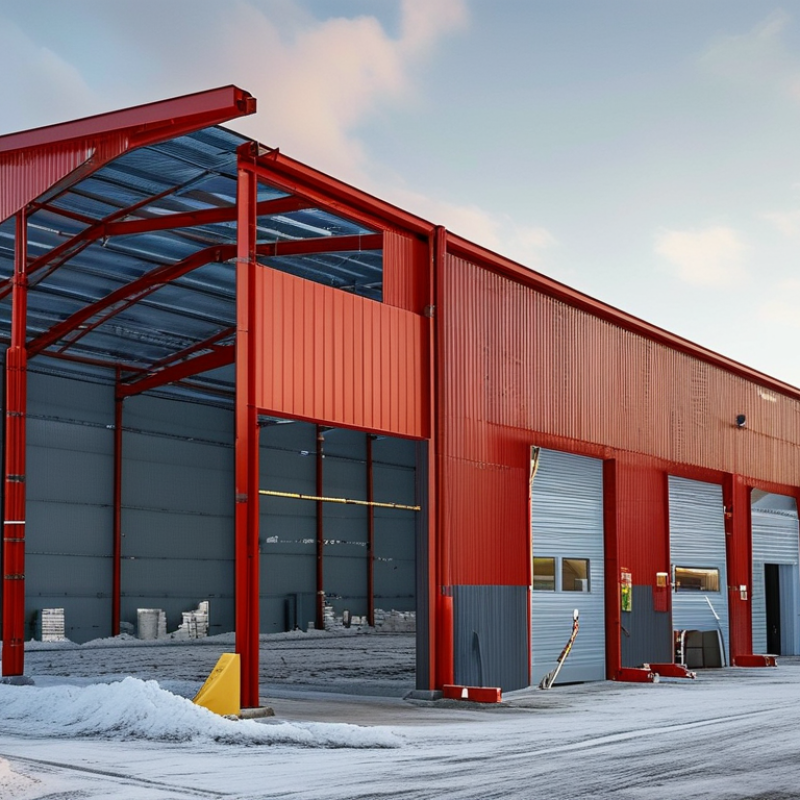
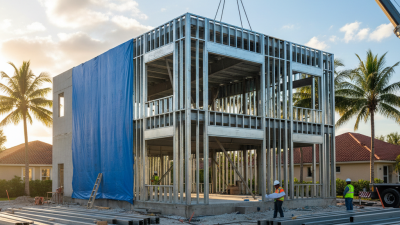
Red iron steel buildings use fabricated structural steel frames, usually coated with a red-oxide primer. The color is not the definition. Columns, rafters, purlins, connections, and bracing form the real system. These buildings commonly serve warehouses, workshops, agricultural storage, and industrial facilities. The term is widely used in trade, but it is not perfectly standardized.
The global scale is substantial. The World Steel Association reported approximately 1.88 billion tonnes of crude steel output in 2024. This figure covers all steelmaking, not only building frames. Still, it shows the deep production base behind international steel construction.
A buyer should request mill certificates, section sizes, weld procedures, and coating specifications. A red primer alone does not provide permanent corrosion protection.
Performance depends on engineering, not appearance. AISC 360-22 provides recognized structural steel design requirements, while EN 1993 supports Eurocode-based projects. Local wind, seismic, snow, fire, and foundation rules must also control the design.
ISO 12944 is useful when specifying protective paint systems for different environments. Port handling can damage primer at edges and bolt holes. That detail is easy to miss.
Buyers should compare total delivered cost, erection tolerances, drainage, and replacement access. “Best” may simply mean suitable, documented, and repairable.
For global buyers, red iron steel buildings often depend on two familiar grades: ASTM A572 Grade 50 and ASTM A992. Both can provide a minimum yield strength of 345 MPa, or 50 ksi. That number describes when steel begins permanent deformation. It does not guarantee identical performance in every building component.
ASTM A572 Grade 50 is commonly selected for plates, columns, beams, and built-up members. It offers practical strength for frames, bracing, and connection plates.
ASTM A992 is primarily specified for rolled wide-flange structural shapes. Its controlled chemistry supports consistent fabrication and improved weldability.
The choice should follow the member shape, loading conditions, and connection design. A stronger grade cannot repair an undersized beam.
Look closely at the paperwork. Mill test certificates should identify the standard, grade, heat number, thickness, and actual mechanical results. Check whether the stated 345 MPa value applies to the purchased thickness. Also confirm impact requirements, welding procedures, bolt grades, and coating systems.
A dry warehouse and a humid coastal site need different corrosion protection. Small details matter.
A common mistake is treating A572 Grade 50 and A992 as interchangeable everywhere. They are similar, not identical.
Local building codes may also require specific design values or approved material standards. Ask an independent structural engineer to review the frame before ordering steel. That step can feel slow, but changing a shipment after fabrication is far more expensive.
Wind, snow, and seismic loads must be calculated before selecting a red iron steel building. ASCE 7-22 uses risk-based wind maps, including a 700-year mean recurrence interval for Risk Category II structures. Engineers must also check exposure, topography, internal pressure, and local gust speeds. A building near open farmland behaves differently from one beside taller warehouses.
Snow design requires more than the ground-load number. ASCE 7-22 considers balanced snow, drifting, sliding, and unbalanced roof conditions. Eurocode EN 1991-1-3 applies characteristic snow actions, usually linked to a 50-year reference period. National annexes can change regional coefficients. That detail matters. A roof near a mountain valley may collect deep, uneven snow beside a lower roof.
Seismic checks should follow ASCE 7-22 or EN 1998-1, depending on the project jurisdiction. The USGS 2023 National Seismic Hazard Model provides updated hazard information for American sites. Engineers then assess soil class, response spectra, importance, ductility, and connection behavior. Bolts, bracing, frames, and foundations must work together. I have seen early layouts look safe until soil data changed the seismic demand. That mistake is easy to make. A precise spreadsheet can still hide a wrong site assumption. Final calculations should use the project coordinates, local authority requirements, and a licensed structural engineer’s review.
For global buyers, panel gauge should match the building’s exposure and daily use. A 26-gauge panel is thicker and generally more resistant to dents, handling damage, and severe weather. In field inspections, it often performs better around loading areas and agricultural sites. A 29-gauge panel can reduce initial cost. It may suit sheltered, low-traffic buildings. That difference matters. Not every site needs the heaviest panel.
Panel thickness does not equal insulation performance. A bare steel panel provides minimal thermal resistance. For heated or cooled buildings, review the complete wall and roof assembly, including insulation, seams, air barriers, and thermal bridges. In cold climates, higher assembly R-values help control heat loss and interior condensation. In hot, humid regions, continuous insulation and careful vapor control become more important. Ask for tested assembly values, not only insulation thickness. R-value claims can be misunderstood.
Regional climate should guide the specification. Coastal projects need protective coatings and fasteners suited to salt-laden air. Snow regions require roof designs that handle drifting and repeated freeze-thaw cycles. Dry, windy areas need secure panel attachments and sealed overlaps. I would request drawings, test data, and installation records before approving a purchase. Small details matter. One weakness is that climate categories can hide local conditions, such as shaded valleys or exposed ridgelines. If budget pressure favors 29-gauge panels, strengthen site protection and inspect vulnerable edges more often.
2026 Best Red Iron Steel Buildings for Global Buyers
Global buyers should screen suppliers by evidence, not polished brochures. ISO’s Survey of Management System Standard Certifications reports more than one million ISO 9001 certificates worldwide. Certification alone proves little, however. Ask for the certificate scope, audit date, corrective-action records, and production traceability. A reliable supplier can connect each column, bolt, and coating batch to inspection documents. Request recent project references in similar wind, snow, seismic, and corrosion conditions.
MBMA practices can strengthen the technical review. Check whether the supplier follows recognized procedures for design coordination, shop drawings, tolerances, and quality control. Independent structural calculations should match the governing local code. Confirm who signs them. This detail is often missed. It can create expensive redesigns after purchase. Require a sample erection manual and a clear list of excluded work, including foundations, insulation, doors, and freight.
Cost comparisons must use landed cost, not the lowest factory quote. Compare steel weight, coating system, packaging, customs, inland transport, and installation support. The McKinsey report “Modular Construction: From Projects to Products” indicates modular methods can reduce schedules by up to 50% and costs by roughly 20% in suitable projects. That result is not universal. Red iron buildings still face port delays, currency changes, and fabrication queues. Ask for a milestone schedule with drawing approval, fabrication, dispatch, and arrival dates. A shorter lead time may hide weaker engineering control.
| Anonymous Supplier Profile | Typical Export Region | Primary Building Scope | ISO 9001 Quality-System Evidence | MBMA Practice Alignment | Indicative Supply Cost (USD/ft²) |
Typical Production Lead Time | Engineering & Documentation | Buyer Screening Result |
|---|---|---|---|---|---|---|---|---|
| Profile A — North American engineered building fabricator | United States and Canada | Pre-engineered red iron steel buildings for warehouses, workshops, agricultural buildings, and commercial facilities | Certificate commonly available Confirm certificate number, scope, issuing body, and validity before purchase |
Strong alignment Typical use of metal-building design procedures, rigid-frame analysis, secondary framing, and documented load criteria |
$12–$22 | 8–16 weeks after approved drawings and deposit | Stamped calculations and permitting support may be available; local jurisdiction review remains necessary | Best fit for projects requiring strong documentation, local code familiarity, and predictable engineering coordination |
| Profile B — European export-oriented steel building manufacturer | European Union and nearby export markets | Industrial halls, logistics buildings, agricultural structures, and insulated metal-building envelopes | Certificate commonly available Request the current certificate and verify the covered manufacturing location |
Comparable practice May apply European structural design standards rather than MBMA procedures; confirm design basis in writing |
$14–$26 | 10–20 weeks after design approval | Often provides structural calculations, fabrication drawings, CE-related documentation where applicable, and material traceability | Best fit for buyers whose project specifications are based on Eurocodes or European product requirements |
| Profile C — High-volume Asian export manufacturer | East Asia and Southeast Asia | Large-span warehouses, factories, distribution centers, workshops, and agricultural buildings | Evidence varies Some facilities hold ISO 9001; verify that the certificate applies to steel-building fabrication, not only trading activities |
Available by specification MBMA-style design can be requested, but the contract should define loads, deflection limits, connection design, and drawing responsibilities |
$8–$16 | 8–14 weeks production; add ocean freight and customs time | Shop drawings are usually available; independent review is recommended for calculations, weld procedures, coating systems, and connection details | Best value potential when the buyer has an experienced local engineer and a clearly controlled technical specification |
| Profile D — South Asian project-export supplier | South Asia, Middle East, and Africa | Low- to medium-rise industrial buildings, storage facilities, workshops, and agricultural structures | Evidence varies Request audit records, calibration records, weld-quality documents, and a certificate issued for the actual production site |
Project-dependent Can work to buyer-supplied MBMA-based criteria, but local engineering review and detailed design deliverables should be included |
$8–$15 | 10–18 weeks production; logistics and port handling can extend total delivery | Confirm wind, seismic, snow, corrosion, fire, insulation, and foundation-interface requirements before quotation | Suitable for cost-sensitive projects when inspection, documentation, and logistics controls are established in advance |
| Profile E — Turkish and Eastern Mediterranean export fabricator | Europe, North Africa, Central Asia, and the Middle East | Warehouses, hangars, industrial halls, retail shells, and multi-purpose steel structures | Often available Verify certificate scope, manufacturing address, and surveillance status |
Design-basis dependent Many suppliers work to Eurocodes; MBMA-style calculations require explicit contractual requirements |
$10–$19 | 8–16 weeks after approved engineering package | Typical submittals include fabrication drawings, material certificates, coating information, and packing lists | Balanced option for buyers seeking moderate cost, regional freight advantages, and flexible export coordination |
| Profile F — Regional roll-forming and light-building supplier | Latin America, Africa, and selected developing markets | Small warehouses, farm buildings, workshops, garages, and low-complexity commercial structures | Must be verified Do not treat a general company registration or product brochure as ISO 9001 evidence |
Limited or not stated Confirm whether the supplier provides engineered rigid frames or only cold-formed components |
$9–$18 | 6–12 weeks for standard components; custom engineering may add 2–6 weeks | Engineering depth, welding controls, coating quality, and local code support vary considerably | Consider only for straightforward buildings after independent structural review and factory-quality inspection |